Common Scent · Practice and research
Farming · Perfumery · Landscape design
Common Scent
Sensing our common ground.
A field method for living among others, human and not, on shared ground. It begins with the nose.
« Ne plus se croire au-dessus, ni en dessous, mais parmi. » No longer above, nor below. Among.
Begin the trail ↓E.R.R. — Eric Roux Reiffsteck · November 2026 · Olive terraces, Roya valley
How does working with land, plants and scent change what a person notices, and what they then decide to do or to leave alone?
A second question comes back in every place: who else lives here, and what reaches them from what I do?
Wellbeing is an intention of this work. It is not a medical claim.
Ground is what is shared. Scent is how it is noticed.
The same soil, water and air are shared by plants, animals and people who did not choose each other. An odour crosses a fence without asking. It is the one common good that cannot be enclosed, and learning to notice it is a way of learning who is there.
Three movements
- PerceiveSlow down, walk, sit, smell.
- ActCultivate, harvest, distil, draw, maintain.
- LearnKeep a trace, watch what follows, change the next gesture.
Eight gestures
They are a vocabulary. They recur in different orders, and some wait for the season.
| Gesture | What it opens | The trace it leaves | |
|---|---|---|---|
| 01 | Walk | Reading a place before drawing a line | A drawn route, a photograph |
| 02 | Talk | Shared knowledge, from those who know or use the place | One sentence that changed a decision |
| 03 | Sit | Time made perceptible | A dated observation from a fixed point |
| 04 | Smell | Atmosphere, season, encounter | A scent entry, placed and dated |
| 05 | Harvest | Renewal: what is taken and what is left | A harvest sheet |
| 06 | Distil | Transformation | A batch sheet linked to the harvest |
| 07 | Think | A design hypothesis | A drawing that changed |
| 08 | Become aware | Responsibility | A decision stated, then revisited |
Landscape as a score
A place is composed in three times at once: the hour of a visit, the year of a crop, and the decades of the landscape itself. Design works on framing, rhythm and duration across all three.
Conditions for an encounter
Anyone taking part may stay silent, skip an invitation or take another route. Feeling nothing in particular is also a result.
After each visit
What did I change in the way I act because I paid attention to this place?
Places of learning
The method is not applied to a place. It is learned from it. Each of these places taught something the others could not. The most recent comes first.
Places
Paris · the most recent
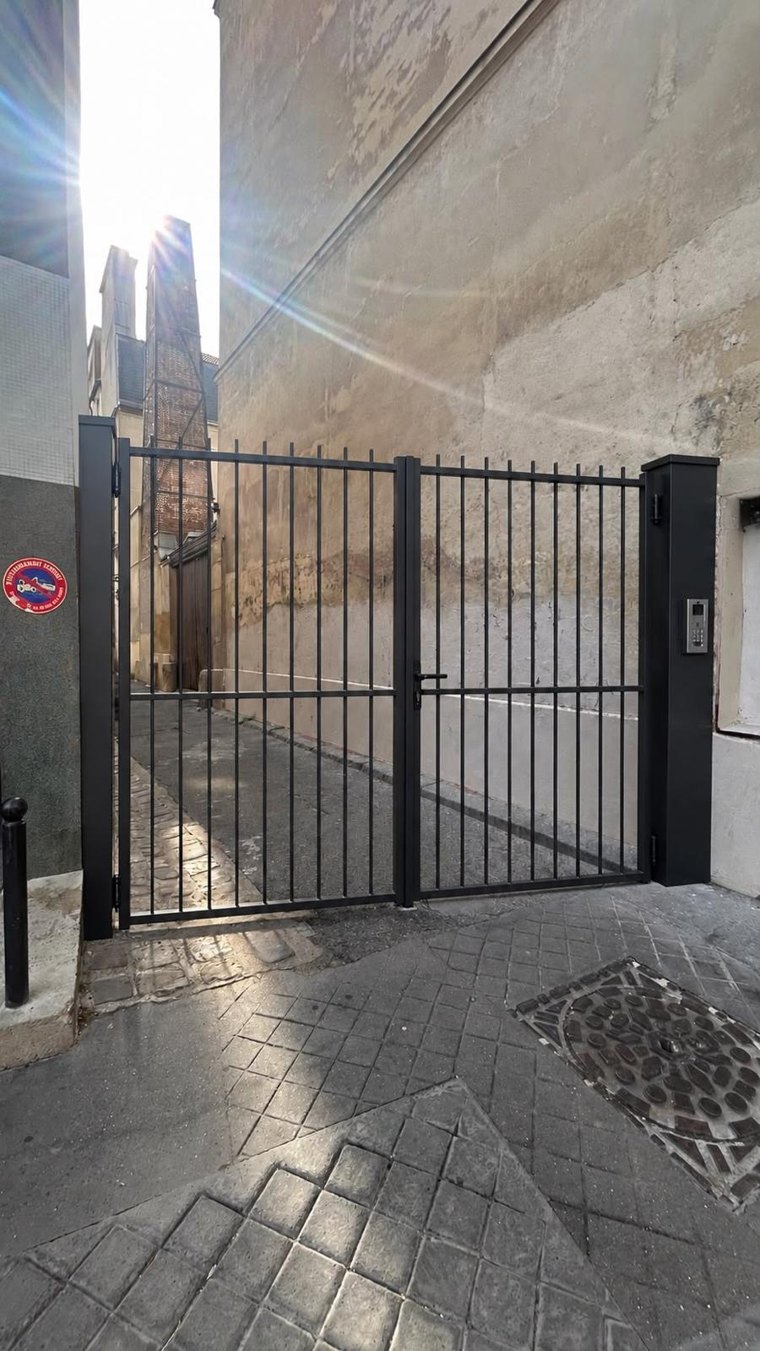
Passage Saint-Bernard
Paris 11e · a courtyard passage on polluted soil Prospective
What can be shared in a place where nothing can be eaten?
The soil rules out food. The project plants trees whose fruit will not be eaten, so that flowering, ripening and scent still happen where people pass every day. Here, smelling may be the only harvest.
What it teachesThat a harvest can be something no one carries away.
Landes · a ferme-paysage nourricière
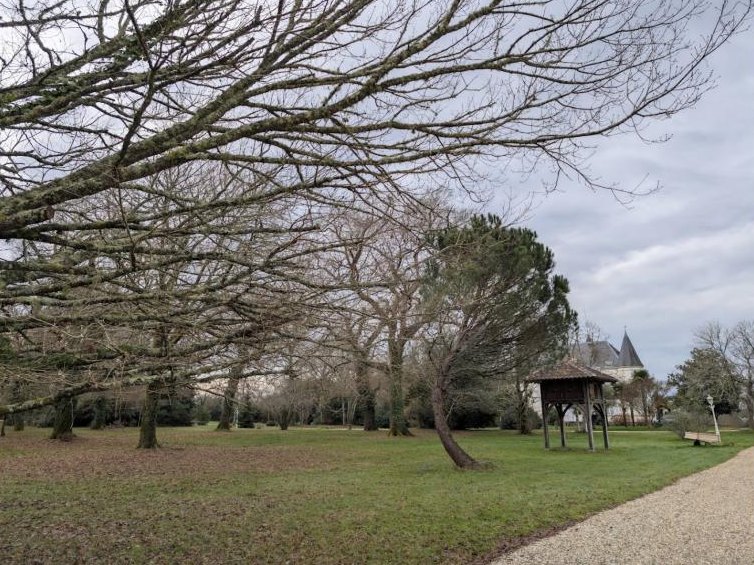
Château de Beylongue
Landes · a farm inside an inherited park, a pond, a village Documented
How can a composed park feed people, and bend for whoever was there first?
Beylongue is a farm as much as a park: a ferme-paysage nourricière, a landscape designed to feed those who live in it and around it. The potager is planted. Orchard, medicinal plants, pasture for a few sheep and cattle, and fish in the pond are being prepared. Prospective
Le Nôtre, continued. The rows are planted straight, in the line of the French formal garden, until they meet something alive that was there first: an oak, a wet hollow, a path an animal already uses. Then the row bends. The rule is protect or relink.
Who else is thereThe old trees of the park. The pond, 1.1 hectares, and the neighbours downstream who receive its water. Two black swans, arrived in October 2026. The village.
What it teachesThat a drawing has to give way.
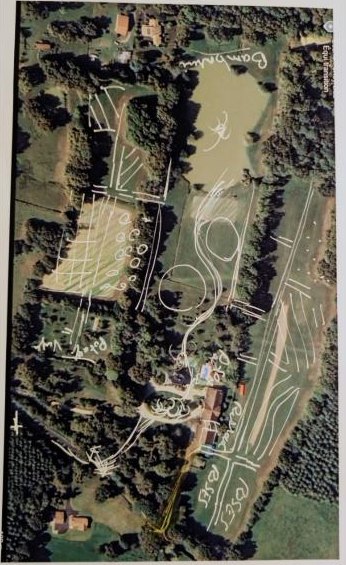
Villa Alchemia, the place · 3D spatial study (conceptual plan, not a survey)
Landes · the first
Onesse, Damade
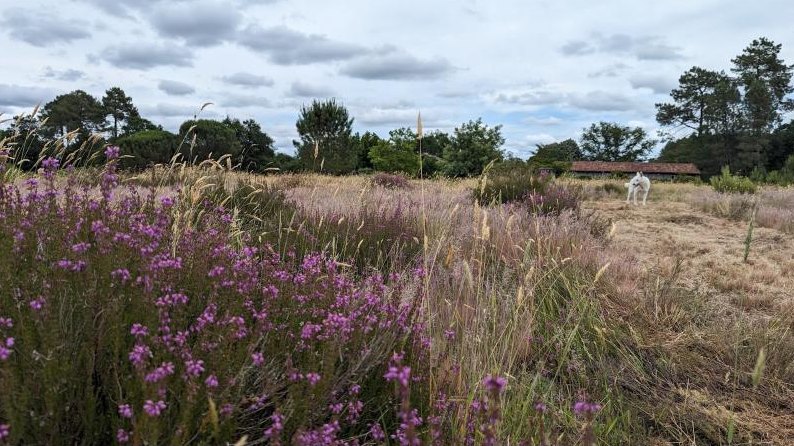
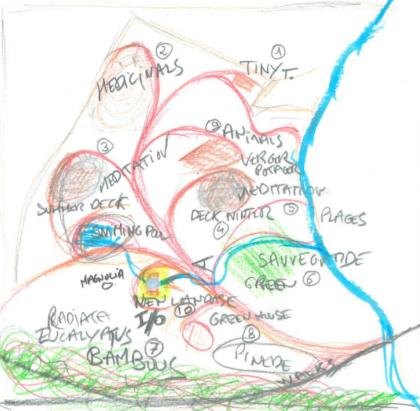
Landes · heath and pine forest Documented
What does a forest ask for before anything is planted?
A first landscape plan, drawn by hand on site: medicinal plants, an orchard and potager, animals, two places to sit, and one zone marked to be kept as it is.
What it teachesThat the first line on a plan can be the one around what stays untouched.
Scent installations and olfactory design
Scent made in public: an installation, a room, a landscape, a talk. Three were made for exhibitions of the Institut pour un Design Soutenable in Paris, curated by Hélène Aguilar and Marie-Cassandre Bultheel. The talks at Saorge came earlier, in the Roya valley.
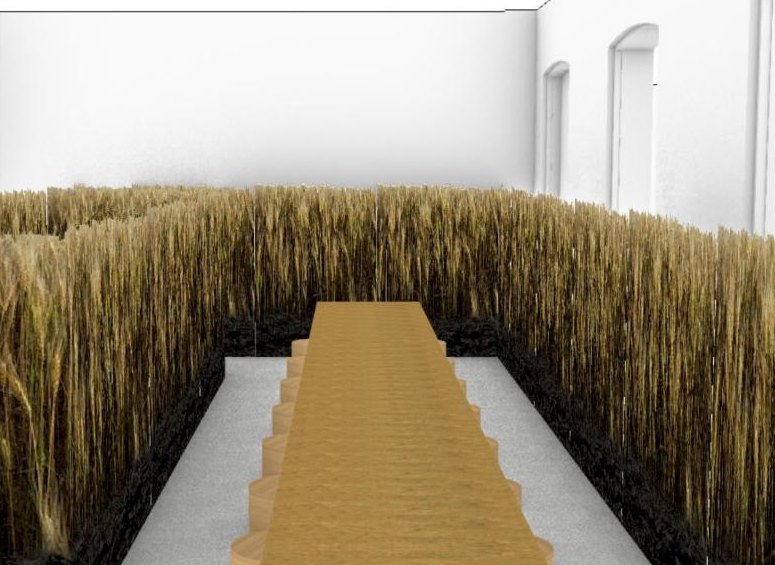
Bâtir Vivant · Wish Cloud
Biennale · Paris 8e · 2 to 12 April 2026 Documented
Wish Cloud: a garden hung in the air. In an alcove, each visitor wrote a wish for a desirable future. The wish was scented with mist distilled from the plants of the cloud, then hung among them, in the way of wish trees, Shinto ema and prayer flags, until the wishes made a collective work.
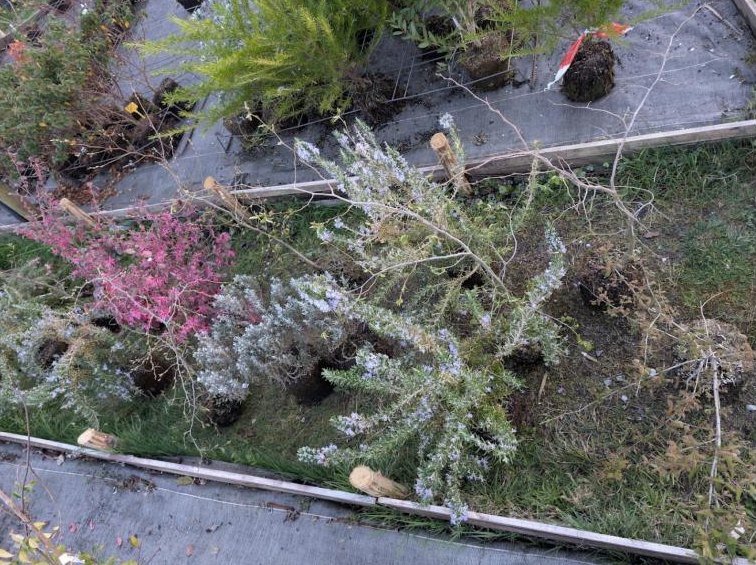
Beside it, a plastic-free nursery developed with landscape designer David Roques: each plant grown in a pot that disappears within a year, until its roots hold their own soil. And the scent landscape of the whole biennale.
Studio Paysan Parfumeur at Bâtir Vivant · Wish Cloud
Cosmos and Matter
Exhibition · Paris 7e · November 2024 to February 2025 Documented
The Bar Botanique, boulevard Raspail: one room of the exhibition, with plant-based perfumes, the copper still at work indoors, and talks. On 16 November 2024, a steam distillation in the copper still accompanied a public conversation on olfaction and wellbeing with Dr Véronique Marché.
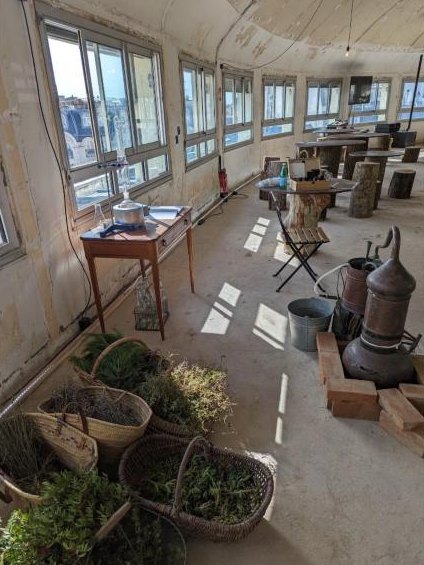
Amour Vivant
Biennale · Paris 10e · 12 to 22 October 2023 Documented
The first collaboration. A copper still and freshly cut Mediterranean plants on the top floor of a former post office: distillation done live, as a talk, in front of the public.
Talks at the Monastère de Saorge
Series of talks · Saorge, Roya valley Recalled
A series of public talks led in the Franciscan monastery of Saorge, a national monument above the Roya, upstream from the farm. Plants, distillation and scent, spoken about in a building made for silence, for the visitors of the French national monuments.
Ahead
New research
Looking for Petrichor, bottom up
A scientific inquiry and expedition, from the soil to the canopy Prospective
Where does the smell of rain begin, and how far up a tree does it climb?
Petrichor is the smell of rain on dry ground. The word dates from 1964, when two chemists steam-distilled dry rocks and found an oil in them: organic matter settled from the air, close to the essential oils of plants, held by clay and stone through the dry season and released by the first rain. The earthy note, geosmin, is made by soil bacteria. Part of the smell of rain may be the smell of the trees, coming back from the ground.
It is an inquiry, the kind that comes before design: before composing a perfume or drawing a place, find out where what you smell comes from. Bottom up: the expedition follows that loop in one forest. It starts with the nose at the soil and climbs: one tree, sampled at the ground and at three heights, at three moments of the day and around one rain, before, during and after. What is found is compared, and a first scent series is composed in which every choice can be traced back to a measurement.
Five steps are named and kept apart: measured, inferred, interpreted, translated, poetic. The measurement is not a perfume. It is the documented place a perfume starts from. Perfumers in Kannauj have long distilled baked clay to make mitti attar; this project does not ask how to bottle the smell, but where in a forest it comes from.
Conceived and led by Éric Roux Reiffsteck, Studio Paysan Parfumeur. Part of this work began in a workshop at ENSCI-Les Ateliers with Horizon Canopée, under the name Parfums des Cimes. Scientific partners and funding are being sought. Next: choose the forest and the tree, run one pilot rain, compose a first triptych.
Looking for Petrichor, project page · Bear and Thomas, 1964 · Instagram @paysanparfumeur
- 1 treeand the soil under it, identified, with the weather recorded
- 3 heightsfoot of the trunk, mid-crown, canopy
- 3 momentsmorning, noon, dusk
- 1 rainbefore, during, after
Earlier project, still open
La Natura Machine
With the artist Emilie Benoist-Gironière · Roya valley Prospective
What if a vending machine gave away a way back to plants?
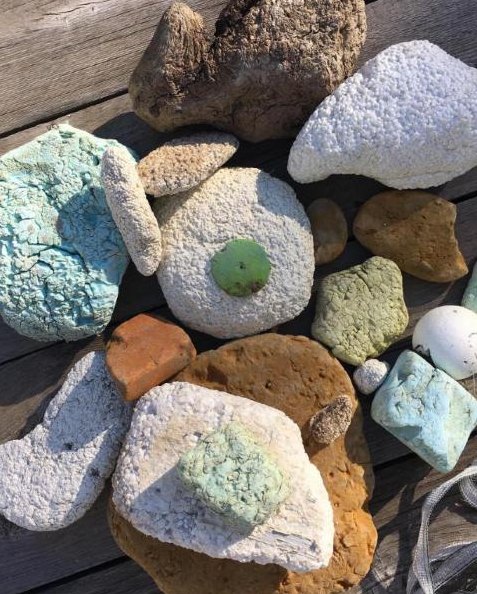
The idea began with a drinks machine found on the banks of the Roya after Storm Alex, in October 2020: a vending machine rebuilt as a work that sells nothing. In a station, a hospital hall or a festival, a passer-by answers a few questions on a screen and receives a personal travel ticket and two plant waters to spray.
The research residency took place in 2022 and 2023 at the Domaine Saint-Jérôme. Emilie Benoist-Gironière made the shell, from plastic debris fused with river sediment and gathered after the storm, and the drawings for the tickets. Studio Paysan Parfumeur grew and distilled the plants. Mathilde Vincent, who first came to the farm as a volunteer, leads the digital interface.
The machine has not yet been acquired. The questionnaire and the personal ticket are the part that current AI tools can now build far faster than when the project started.
La Natura Machine · Emilie Benoist-Gironière on the residency
The farms
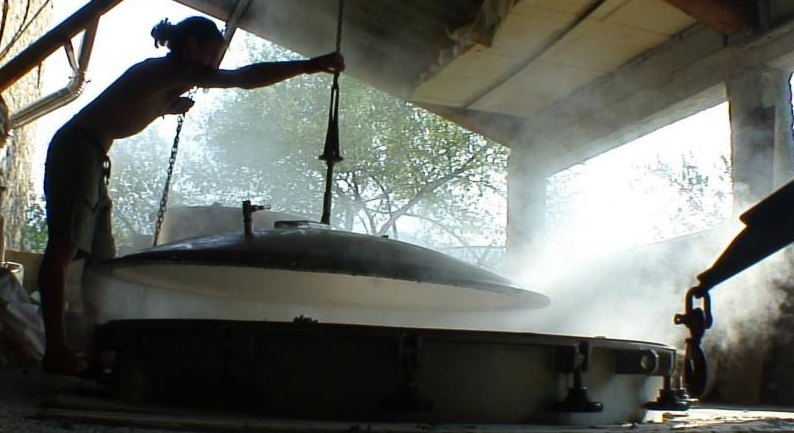
Before it was a method, this was farm work. These two estates are not case studies: what was not recorded at the time is not reconstructed as data. The farming continues today at Beylongue, as a ferme-paysage nourricière.
Domaine de la Chapelle Saint-Jérôme
Breil-sur-Roya · Roya valley · 2008 to 2025 Recalled
An orchard of eight hundred centenarian olive trees on the Italian slope of the Roya valley, in the commune of Breil-sur-Roya, tended from 2008 to 2025 with plant preparations and biodynamic methods. The workshop was in Olivetta San Michele, 700 metres away. The oil of the second harvest won a silver medal at the Concours général agricole in Paris.
More than a hundred people stayed and worked there: WWOOF volunteers from many countries, and interns from Yale, Stanford, AgroParisTech and Montpellier's agronomy school. Teaching the same gestures every month is where the method was first put into words.
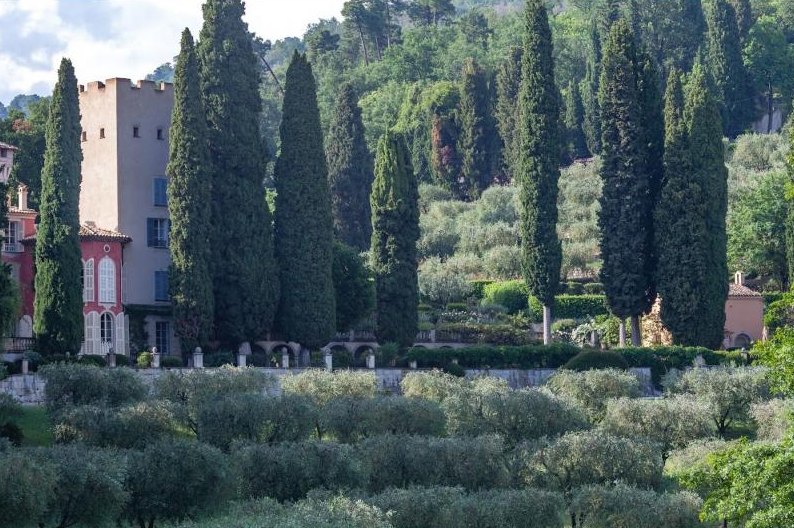
Château du Vignal
Olive growing in biodynamics Recalled
A first long look at how a composed park and a working farm share one piece of land. Beylongue takes up the same question.
One place followed through time
A plot, its surroundings and one plant.
- A baseline. The plot mapped with its working access, soil and water described, fixed photograph points, a question that fits the season.
- A coherent chain. Walk and sit establish observation. Smell follows change. Harvest and distil link a dated material to a batch.
- Identifiers. Site, plot, plant, visit, harvest, batch. A photograph and a vial trace back to the same ground.
- Feasibility kept visible. Time, quantities, constraints. Leaving a place alone is also a decision: it needs a reason and a return visit.
What each case delivers
- A situated account with at least one documented design decision.
- A traceable record from plant to harvest to distillate.
- A bounded trial or protocol. What cannot be collected stays prospective.
The harvest sheet
What leaves
For each place, what went out and to whom: water, cuttings, vegetables, a distillate, an invitation. A record that only counts what comes in describes an owner. A neighbour also counts what goes out.
A small evidence collection
- One drawing that changed after observation
- One conversation that influenced a decision
- One sequence from an observation station
- One seasonal scent entry
- One harvest and distillation pair
- One trial or proposed experiment
Begin with one real harvest. Reconstruct it from notes, photographs and memory, marking what is documented and what is recalled, and let its gaps design the next one.
From tending land to living among others
Nature is my intelligence.
I became a farmer in 2008, among the olive trees of the Roya valley, and farmed there until 2025. Working with the same trees, season after season, taught me to pay attention: to the soil, the weather, the plants growing between them and the many lives that share a cultivated place.
At the Domaine de la Chapelle Saint-Jérôme and Château du Vignal, the daily work of olive growing—and my experience of biodynamic approaches—shaped a way of thinking through care, observation and return. I became a perfumer by distilling what grew there. Scent opened another way to meet a plant: intimate, fleeting, inseparable from the place and season in which it grows.
Common Scent grew out of these years. It is a method I am developing through landscape design, farming and olfaction: a way to approach a place by walking, talking, sitting, smelling, harvesting, distilling, thinking and becoming aware. These gestures are an open score, adapted to each place. They invite us to ask who is already there, what our actions change, and what we might leave, share or return.
Today, I develop this practice in Paris and in the Landes. At Château de Beylongue, a ferme-paysage nourricière, rows are planted straight, in the line of the inherited park, until they meet a tree or a path an animal already uses. Then they bend. Elsewhere, the same attention might lead to a different gesture—or to the decision to leave a place alone and return to observe.
Before farming, I worked in cinema. My first film, Néba, made for France 2, followed a man who had come to France to work without papers and could not return home to bury his mother. I made it to refuse a label. Cinema still informs how I design: through a sequence of movements, perspectives, pauses and encounters.
My autobiographical essay Selfie Paysan, about this change of life, was published by Ahaha Éditions in May 2026.
Press and broadcast: Yatzer · Nuvo Magazine · Sud'nly · Où est le beau ?, episode 215
Sources: Common Scent research map · Natural Intelligence, mémoire, 2026.